
Nature Finance UK Review 2025 published: Key insights into a growing project pipeline
Private sector interest in the environmental outcomes delivered by restored land and…

Learn what we're working towards, together
Get to know our team & board of trustees
See the difference our work makes

We sat down with our Director, Bruce Howard, to discuss the UK’s nature finance arena, and how things have changed since the inaugural Nature Finance UK Conference in 2018. Find out more about this year’s conference here.
BH: Around the time the conference began, a growing number of economists were making the economic case for a restored natural environment. The term ‘natural capital’ was to the fore. There was a problem though. At Ecosystems Knowledge Network, we noticed there wasn’t much talk of who was going to pay whom, when, how or why to enable this restoration to happen. The role of corporates in how the value of land, water and nature is harnessed was unclear. This is why EKN convened the inaugural conference in 2018.
At the first conference, there was unusually heavy snow in London, where the event was taking place. These wintry conditions summed up the ‘natural capital investment’ arena as it was: not particularly hospitable.

The first conference did bring together some very progressive leaders who could see the opportunity for financial innovation in the restoration of land, water and nature across our islands. This included Bevis Watts, who was at that time Chief Executive of Triodos Bank. It also included Lord Deben, the first Chair of the UK Climate Change Committee. Some of the major nature conservation organisations were engaged too.
The pursuit of an increased role for private money in environmental stewardship is now commonly referred to as nature finance. It has grown exponentially during the life of the Nature Finance UK Conference, partly because of this event. It is encouraging to see so many enterprises committed to it, and to multi-million pound transactions beginning to take place.
BH: Over the past nine years, a much wider array of people have engaged in this arena. There are a lot of enterprises to facilitate transactions, to monitor and verify, to help provide strategy. HM Government, Welsh Government and Scottish Government are now part of the conversation.
Many of the people originally drawn to this arena were seeing it as a way to address what they saw as a funding gap for environmental stewardship. There was a realisation that available public money was never going to suffice in meeting our needs for an environment that delivers climate resilience, net zero and biodiversity.
This is about opportunity, not the filling of a gap
Now this isn’t a conversation about businesses being more charitable. It’s mainly about businesses finding opportunities to deliver on their corporate objectives and meet their needs. This is about opportunity, not the filling of a gap.
BH: Lots of people like to talk about investment in nature. What matters first and foremost is the trading in environmental outcomes. Therefore, it has been great to see entities like Wilder Carbon providing a mechanism for companies to buy nature-rich carbon. The purchase by Morgan Sindall of carbon credits via woodland restoration on the Blenheim Estate was another high point.
On the investment side, an important milestone along the way has been pension funds becoming interested. Rebalance Earth have been pioneer enablers of this, deploying a pioneering allocation from the West Yorkshire Pension Fund.

BH: There was a time when people worried this was about putting a price on nature and that this was going to ultimately harm the natural environment. Now those fears have been allayed and we do have some good guardrails in place. The BSI’s Nature Investment Standard, for example.
I think that the biggest thing that needs to be opened up – which the 2026 conference aims to demonstrate – is that this arena isn’t just about businesses and governments meeting environmental targets or goals. We need to see nature finance as part of a green and resilient economy. Nature-based projects deliver livelihoods and social value, especially in less populated areas of our islands
Transactions need to be put in a broader context of regional economic resilience. We need to consider the social outcomes from these transactions. Nature finance has the potential to support a lot of livelihoods in some of the UK’s most economically challenged areas. And I really hope the 2026 conference will draw that out.
BH: There’s a lot more opportunity to bring businesses together. Especially smaller businesses that don’t have big financial resources but collectively could work together to create places that are good for their staff, good for their customers and much more resilient to climate change.
There are also opportunities to bring together many different types of land managers, so that their collective offer is meaningful for businesses. It involves those smaller land managers working with our tapestry of rural estates and larger landowners.
BH: There are two things I’m looking forward to at this year’s conference:
Firstly, it’s hearing more from businesses about what their needs and ways of working are. There is a danger that people treat businesses as by and large the same. The reality is that every business in the UK has very specific needs and concerns relating to the environment in which they operate.
The other thing I’m looking forward to is greater scale. So far in this arena there have been very innovative farmer clusters, in particular valleys and river catchments, working to deliver environmental outcomes. But those are often relatively small. I think there is opportunity, and we will see it at the conference this year, to scale up these local schemes, to bring them together into much bigger regional offerings. And those regional offerings will be able to deal with the multiple climate risks that we face.
BH: The networking value of this event is huge. It is incredible to bring together diverse professionals from all parts of the UK, right across our islands, coming together under one roof and able to understand each other’s needs and capabilities. Year on year, it is consistently what participants tell us they value most from this event.
BH: By 2030 all parts of the UK will see transactions that are beneficial for businesses and the public sector. I think within a few years we will see more transactions that relate to both Wales and Northern Ireland. By 2030 I think we will see nature finance and climate finance coming together and being aligned, rather than being seen as separate fields.
By 2030 all parts of the UK will see transactions that are beneficial for businesses and the public sector
We will see a much bigger array of corporates choosing to secure their environmental outcomes within the UK. It will be much more the norm for UK businesses to be securing environmental outcomes within these shores.
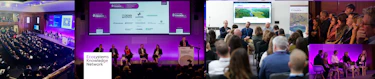
Our 9th annual Nature Finance UK Conference is taking place on 12 November this year, at the QEII Conference Centre, London.
Explore the programme here, including sessions on how UK businesses can secure what they need from the natural environment, what aspects of nature are and aren’t investible and the key to incentivising innovation and scale in nature markets.
Private sector interest in the environmental outcomes delivered by restored land and…

Across the UK economy, a shift is underway in how nature is…
Create an account today to favourite content, recieve updates and join groups.
Already have an account? Sign in here